Suicide & Crisis Lifeline

Call or text 988 for free and confidential support 24/7

Help For Veterans

Connect

For veterans, maintaining strong social connections is a cornerstone of mental health and overall well-being. Transitioning from military life to civilian life can sometimes feel isolating, and the bonds formed during service may not always carry over. Building and nurturing meaningful relationships with family, friends, peers, and community members can provide a critical sense of belonging and support.

Connection helps veterans in several ways:
  • Reduces feelings of isolation and loneliness: Regular contact with others provides emotional support and helps veterans feel understood and valued.
  • Encourages sharing and processing experiences: Trusted relationships create safe spaces to discuss challenges, trauma, or stress, which can aid in coping and healing.
  • Promotes access to resources: Being connected to social networks often opens doors to programs, services, and opportunities for growth and support.
  • Strengthens resilience: Social ties can buffer against stress, helping veterans navigate difficult transitions and life events more effectively.
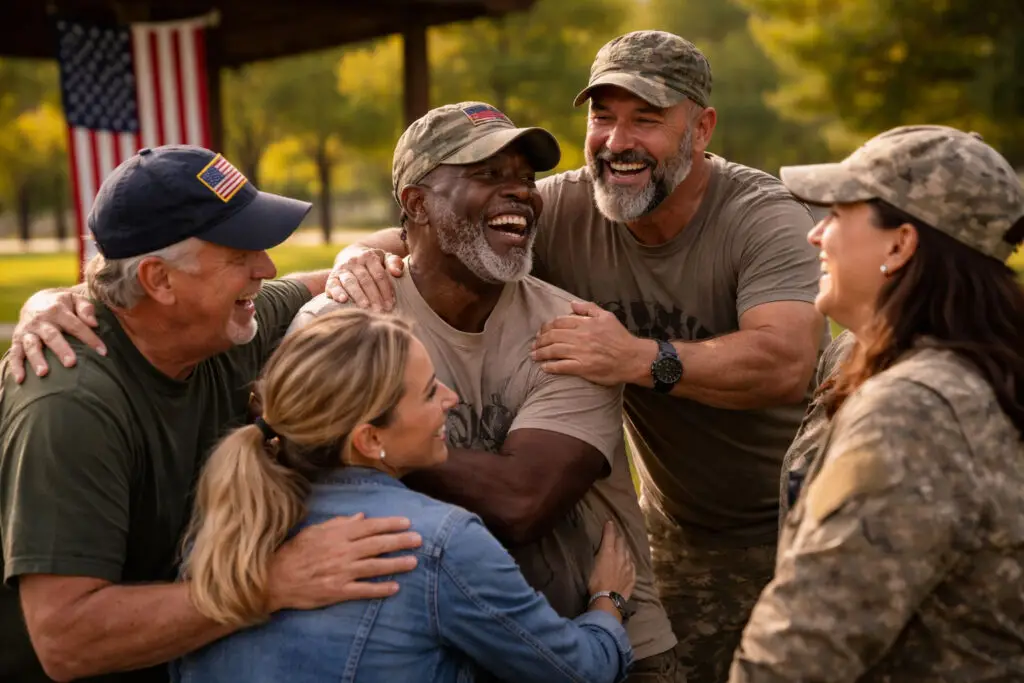
Group of veterans laughing together outdoors while building friendship, peer support, and community connection

Community initiatives, peer support groups, and family engagement all play a vital role in fostering these connections. By prioritizing connection, veterans can enhance their mental health, improve well-being, and feel more integrated into the communities they serve and call home.

Staying socially connected is essential for mental health and well-being. Veterans can strengthen their connections in a variety of ways:

  1. Peer Support Groups – Joining veteran-focused groups or programs, such as those offered by local VA centers or veteran service organizations, provides shared understanding and camaraderie.
  2. Family and Friends – Regularly reaching out to loved ones through calls, visits, or virtual chats helps maintain close personal bonds.
  3. Community Engagement – Volunteering, participating in community events, or joining clubs can foster new friendships and a sense of purpose.
  4. Online Veteran Communities – Online forums, social media groups, and apps designed for veterans can help maintain connections, especially for those who may be geographically isolated.
  5. Professional Support – Mental health professionals, therapists, and counselors can help veterans navigate challenges and connect them with supportive networks.
  6. Mentorship and Advocacy – Serving as a mentor or advocate for fellow veterans creates meaningful relationships and reinforces personal purpose.

Key Takeaway

By taking small, intentional steps to connect, veterans can reduce isolation, build resilience, and strengthen their overall mental health and well-being.

Be Active

Physical activity plays a vital role in supporting the mental health and overall well-being of veterans. Regular movement not only strengthens the body but also has profound effects on the mind, helping veterans cope with stress, anxiety, and the challenges of transitioning to civilian life.

Benefits of Staying Active:
  • Reduces stress and improves mood: Exercise releases endorphins, which can naturally lift mood and reduce feelings of anxiety or depression.
  • Supports better sleep: Regular activity helps regulate sleep patterns, which are often disrupted by stress or trauma.
  • Enhances cognitive function: Physical activity improves focus, memory, and mental clarity, helping veterans navigate daily challenges.
  • Builds resilience: Engaging in consistent movement encourages discipline and a sense of accomplishment, which can strengthen emotional resilience.
  • Fosters social connections: Participating in group exercise, sports, or recreational activities provides opportunities to meet others and build supportive relationships.
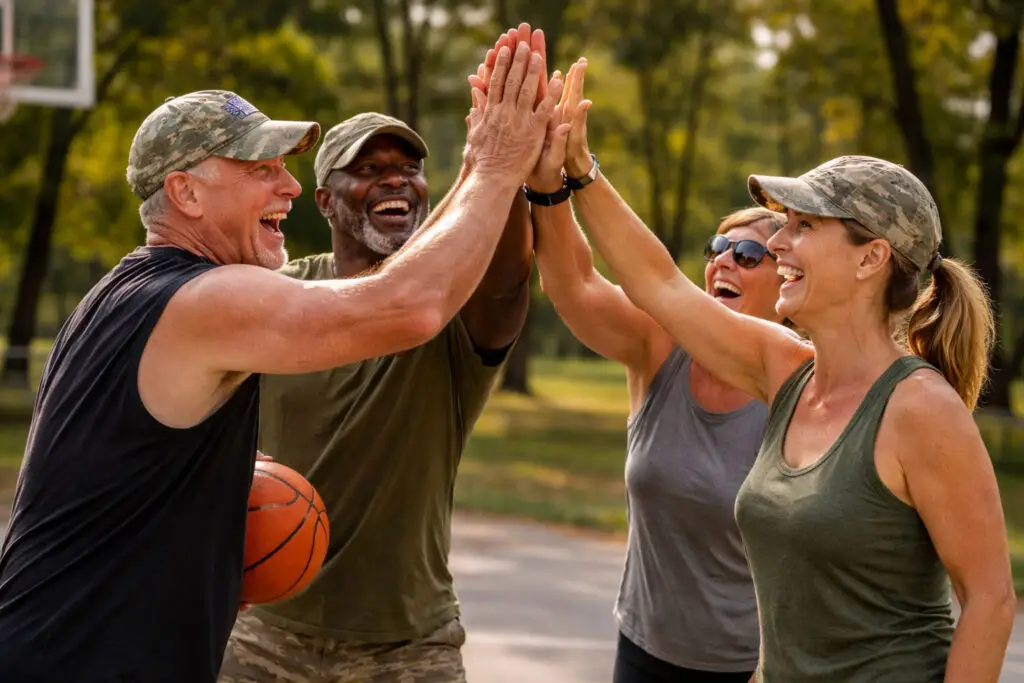
Veterans high-fiving during an outdoor basketball game to support physical activity, teamwork, and mental well-being

Ways Veterans Can Stay Active:

  1. Walking, jogging, or cycling in local parks or neighborhoods
  2. Joining fitness classes or recreational sports leagues
  3. Participating in adaptive or community-based exercise programs for veterans
  4. Engaging in hobbies that involve movement, such as yard work, golf or disc golf, hiking through the woods, or walking a trail in one of our beautiful parks.

Key Takeaway

By incorporating regular physical activity into daily life, veterans can enhance their mental and emotional well-being, improve physical health, and feel more connected to their communities.

Additional Resources

Take Notice

Mindfulness—the practice of paying attention to the present moment with openness and curiosity—can be a powerful tool for veterans seeking to improve their mental health and overall well-being. Many veterans face stress, anxiety, and memories from service that can be difficult to manage. Mindfulness offers a way to notice thoughts, feelings, and bodily sensations without judgment, creating space for calm and clarity.

Benefits of Mindfulness for Veterans:
  • Reduces stress and anxiety: Mindfulness helps veterans step back from overwhelming thoughts and regulate emotional responses.
  • Supports emotional resilience: Being present allows veterans to respond to challenges more thoughtfully rather than reacting impulsively.
  • Improves focus and cognitive clarity: Mindfulness strengthens attention and memory, helping with daily tasks and decision-making.
  • Enhances self-awareness: Veterans can better understand their triggers, emotions, and patterns of thought, fostering personal growth.
  • Promotes overall well-being: Practicing mindfulness can improve sleep, lower tension, and increase feelings of calm and contentment.
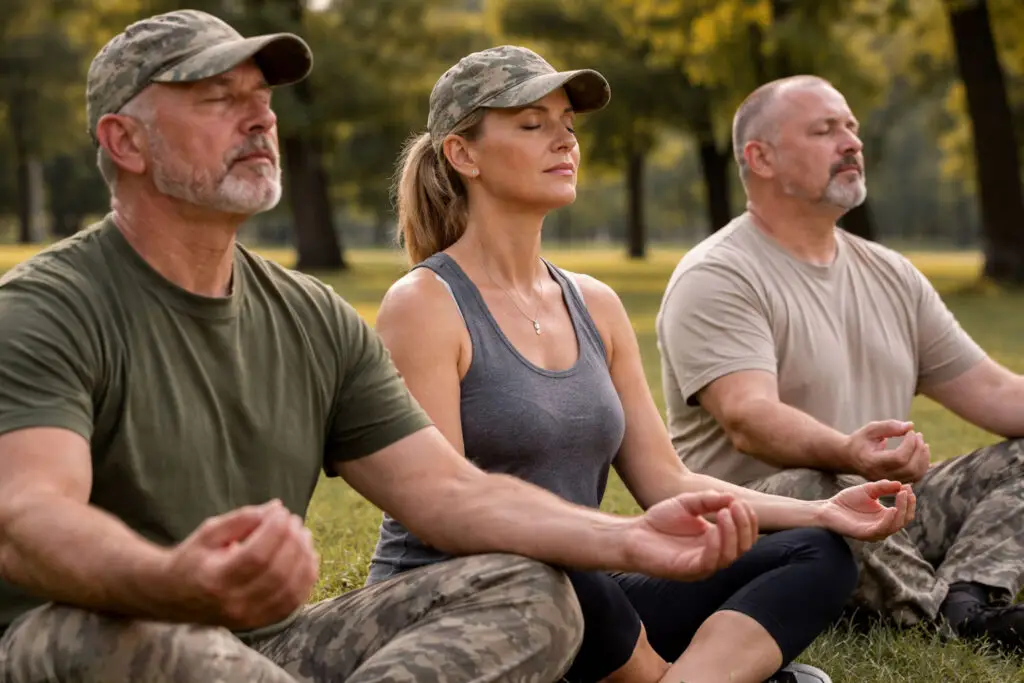
Veterans meditating outdoors together to support mindfulness, stress relief, and mental well-being

Simple Ways Veterans Can Practice Mindfulness:

  1. Breathing exercises: Focus on slow, steady breaths to center attention and calm the mind.
  2. Body scans: Notice sensations throughout the body, releasing tension where it’s held.
  3. Mindful walks or movement: Pay attention to the sights, sounds, and feelings of movement in everyday activities.
  4. Journaling: Reflect on thoughts and experiences in a non-judgmental way to increase awareness and acceptance.
  5. Mindful meditation apps or groups: Many programs are designed specifically for veterans and can provide guidance and community support.

Key Takeaway

By taking time to pause, notice, and be present, veterans can cultivate a sense of inner balance, reduce stress, and strengthen their mental health and overall well-being.

Additional Resources

Give

Engaging in acts of giving—whether through volunteering, mentoring, or supporting others—can have profound benefits for veterans’ mental health and overall well-being. Giving allows veterans to reconnect with purpose, community, and meaningful social engagement, which are often key to a fulfilling civilian life.

Benefits of Giving for Veterans:
  • Enhances sense of purpose: Helping others reinforces a veteran’s sense of value and contribution, which can strengthen identity beyond military service.
  • Reduces stress and improves mood: Acts of kindness and service can trigger positive emotions and reduce feelings of anxiety or depression.
  • Builds social connections: Volunteering or mentoring fosters meaningful relationships and a sense of belonging.
  • Promotes resilience and self-worth: Contributing to the well-being of others reinforces confidence and personal efficacy.
  • Encourages gratitude: Giving often cultivates appreciation for community, relationships, and personal strengths.
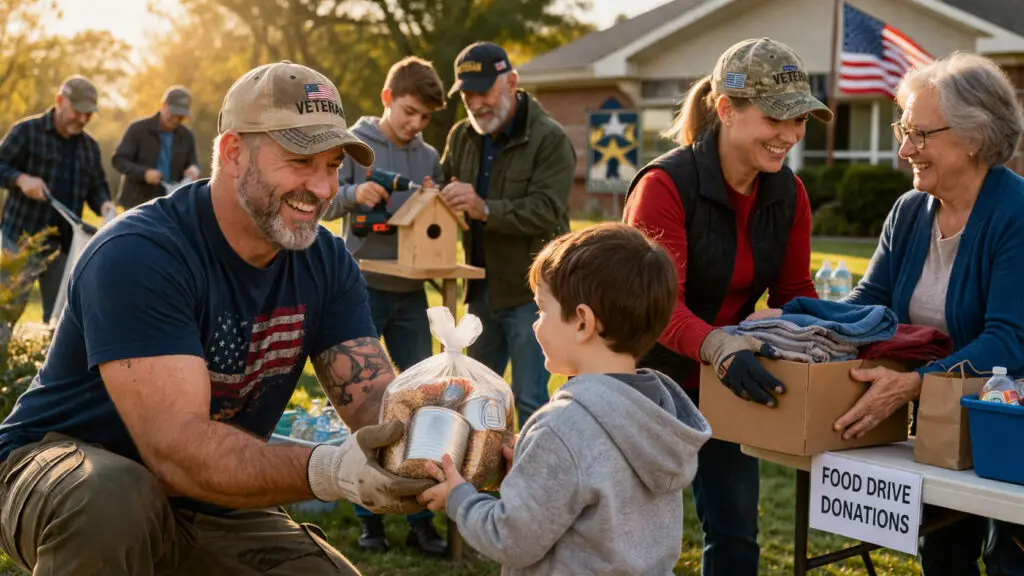
Veterans helping children and community members at an outdoor food drive donation table

Ways Veterans Can Give Back:

  1. Volunteering at local community organizations, shelters, food banks, or veteran service programs
  2. Mentoring fellow veterans or youth in skill-building and life transitions
  3. Participating in community improvement or recreational projects
  4. Supporting peer groups or advocacy efforts for fellow veterans

Key Takeaway

Through giving, veterans can nurture their own mental health while positively impacting the lives of others, fostering a cycle of well-being, connection, and purpose.

Keep Learning

Continued learning—pursuing new skills, knowledge, or personal growth—can have a powerful impact on the mental health and well-being of veterans. Learning not only stimulates the mind but also provides a sense of purpose, achievement, and adaptability, which are especially valuable during the transition to civilian life.

Benefits of Continued Learning for Veterans:

  • Boosts cognitive health: Engaging in new challenges keeps the brain active, improving memory, focus, and problem-solving skills.
  • Enhances self-confidence: Gaining new skills or knowledge fosters a sense of accomplishment and capability.
  • Supports emotional resilience: Learning encourages adaptability, helping veterans navigate changes and overcome challenges.
  • Strengthens social connections: Classes, workshops, and online communities provide opportunities to meet others with shared interests.
  • Promotes purpose and meaning: Pursuing personal or professional growth can reinforce a veteran’s sense of direction and fulfillment.
Veterans learning together in a classroom setting to support personal growth, connection, and mental well-being

Ways Veterans Can Engage in Continued Learning:
  1. Enrolling in educational programs or vocational training
  2. Participating in workshops, seminars, or online courses
  3. Exploring new hobbies, creative pursuits, or skill-building activities
  4. Joining community groups focused on learning or professional development
  5. Engaging in peer learning or mentorship opportunities

Key Takeaway

By embracing lifelong learning, veterans can stimulate their minds, strengthen resilience, expand their networks, and enhance their overall mental health and well-being.

Find a Provider That's Right For You

Additional Supports

Catholic Charities

602 South Street Chardon, OH 44024

In Geauga County, Catholic Charities offers a number of programs encompassing several service areas including early intervention services and education, employment services, and mental health and substance abuse programs for families & children. Our programs serve individuals of all faiths and ethnicities, and help people grow and thrive from youth all the way to those in their late stages of life.

Family Pride of Northeast Ohio

521 Fifth Avenue, Suite A, Chardon, Ohio 44024

Family Pride focuses on mental health services to meet your unique needs. We offer individual, couples, and family services in your own comfort zone. Family Pride makes accessing services easier by offering counseling and case management in the home, office, school, via telehealth or in your community.

Lake Geauga Recovery Centers

209 Center Street Chardon, OH 44024

Lake-Geauga Recovery Centers provides services for individuals and families struggling with substance abuse or addiction, mental health concerns or problem gambling. Evidence based services are provided in a trauma informed environment by licensed professionals in order that individuals may achieve overall wellness and long-term recovery.

Ravenwood Health

12557 Ravenwood Dr. Chardon, OH 44024

Ravenwood Health strives to provide a safe and compassionate space that supports and respects the unique journey of each person’s path to healing. We service children, adults and families experiencing mental health or addiction concerns. Services include counseling, psychiatry and much more. Mobile crisis services and walk-in appointments available Monday-Thursday.

Veteran Services

These local agencies have clinicians who are trained to provide clinical care for veterans

Family and Community Services Veteran Support Line

Veterans should call this number to get information on temporary shelter options and eligibility information on Supportive Services for Veteran Families (SSVF) assistance.

Geauga County Veterans Services

  • Transportation for eligible veterans to Veterans Administration Medical Centers.
  • Emergency Financial Assistance and guidance on obtaining other aid from local, state and federal organization.
  • Assistance in making application for benefits administered by the Department of Veterans Affairs.
  • Assistance with dependent’s applications for benefits upon the death of the veteran and more.

National Call Center for Homeless Veterans – Available 24/7

Information about VA Homeless Programs and other services in your local area, connects you to your local VA Comprehensive Homeless Program team.

VA Northeast Ohio Healthcare System

  • Louis Stokes Cleveland VA Medical Center
    10701 East Boulevard
    Cleveland, OH 44106
    216.791.3800
  • Lake Community Based Outpatient Clinic
    35000 Kaiser Court
    Willoughby, OH 44094
    440.269.4600
  • Ravenna Community Based Outpatient Clinic
    6751 N. Chestnut St.
    Ravenna, OH 44266
    330.296.3641
  • Parma Community Based Outpatient Clinic
    8787 Brookpark Road
    Parma, OH 44129
    216.739.7000

Vet Center (Readjustment Counseling Center)

Individual, family and group counseling services to aide in the readjustment to civilian life. Primary eligibilities include those that deployed to areas hostility, survivors of MST, and grief counseling for active-duty death. Full eligibility list available at website.

Veterans Benefits and Healthcare Administration

Veterans Benefits and Healthcare Administration eligibility and enrollment, access to nearest VA facilities, information on VA benefits such as disability compensation and pension, education programs, caregiver support, insurance, home loan guaranty, and burial scheduling and markers, financial information such as debt and payment options. Referrals during business hours, with an introduction from you and your issue to a VA specialist best able to assist.

Veterans Crisis Line – Available 24/7

Are you a veteran of concerned about one? Don’t wait. Reach out. You don’t have to be enrolled in VA benefits or healthcare to call. Dial 988 then press 1, chat live at Veteran Crisis Line or text 838255.